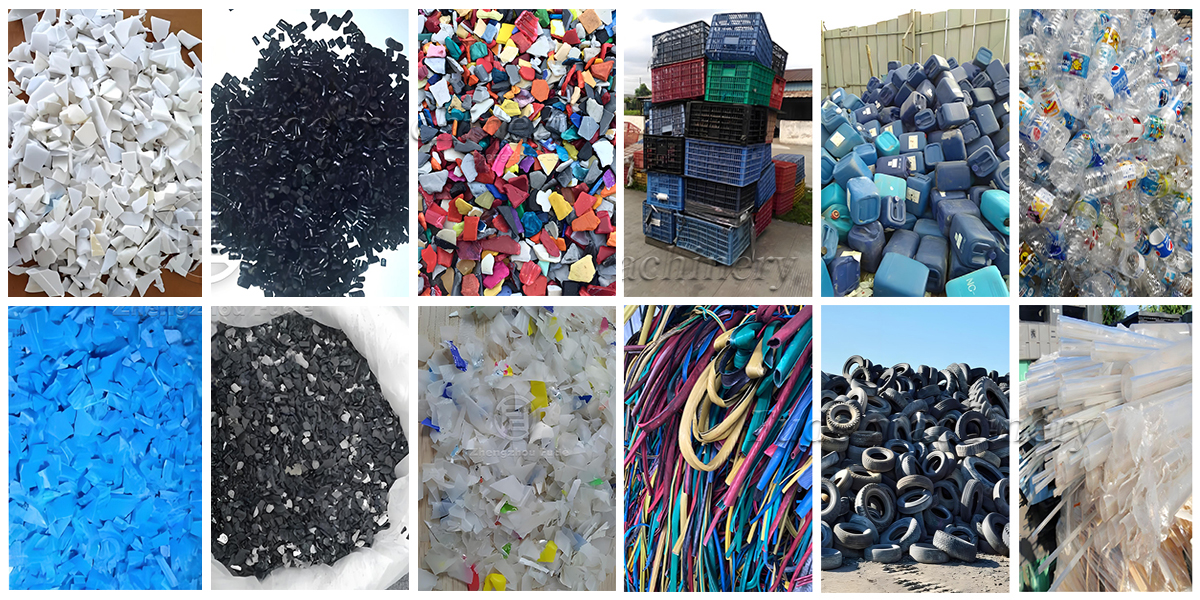
Plastic waste is not one single material. It’s a vast category, from tough, solid industrial purgings to thin, stretchy agricultural film and everything in between. Using the wrong machine to process your specific type of plastic is the fastest way to equipment failure, costly downtime, and a stalled operation. This is why the primary shredder is the most important machine in your entire line.
At Fude Machinery, we see the plastic shredder as more than just a size-reduction tool. It is the First Line of Defense for Your Entire Recycling Operation. Its job is to be the toughest machine on the floor, taking the initial, brutal impact of your raw material and turning it into a manageable form that the rest of your system can handle. This guide will help you choose the right defense for your plastic.
Table of Contents
Why a Shredder, Not a Crusher, Comes First
Many people confuse shredders and crushers (granulators). Placing them in the wrong order in your line is a critical mistake. The shredder is your heavy-duty defender; the crusher is your high-speed finisher. You always send in the defender first.
This table clarifies their distinct roles in your defensive line.
Feature / Role
The Shredder (The “Defender”)
The Crusher (The “Finisher”)
Why This Order Matters
Operating Principle
Low Speed, High Torque. It uses immense rotational force to slowly rip and tear apart large, bulky, or tough materials.
High Speed, Sharp Cutting. It uses a fast-spinning rotor with sharp knives to rapidly slice material into a small, uniform flake.
Feeding a large, solid purging directly into a high-speed crusher will destroy the crusher. The shredder’s job is to break the material down to a safe, manageable size for the finisher.
Input Material
Large purgings, baled film, car bumpers, IBC totes, large pipes, mixed rigid plastics.
Smaller, pre-shredded pieces, injection molding runners, plastic bottles, small profiles.
The shredder is designed to handle the unpredictable and difficult items in your waste stream. It protects the more delicate, high-speed crusher from damage.
Primary Goal
Bulk Volume Reduction. To take large, unmanageable material and make it small and conveyable.
Precise Size Refining. To take smaller pieces and create a uniform, high-value regrind for sale or extrusion.
The shredder does the “dirty work” of initial breakdown. The crusher, as we explain in our Plastic Crusher Guide, creates the final, valuable product.
Which “Defense System” is Right for Your Plastic?
Choosing the right plastic shredder means matching the machine’s strengths to your specific “threat”—the type of plastic you need to process.
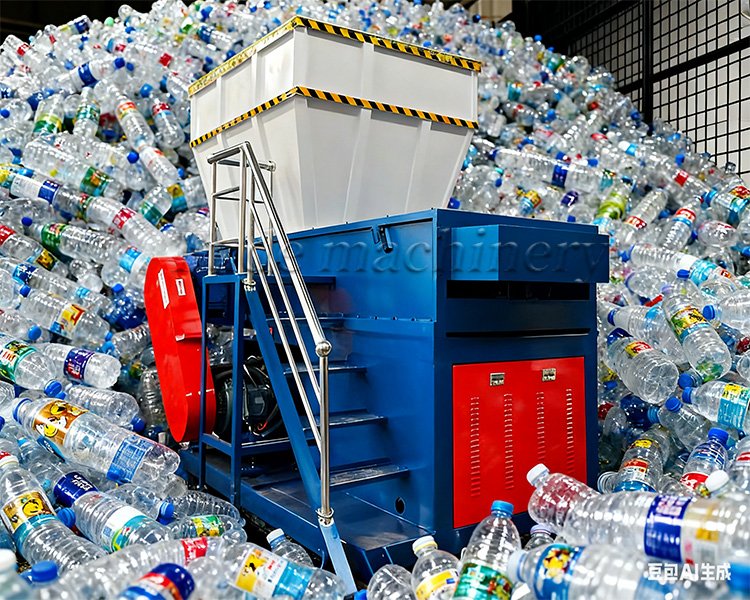
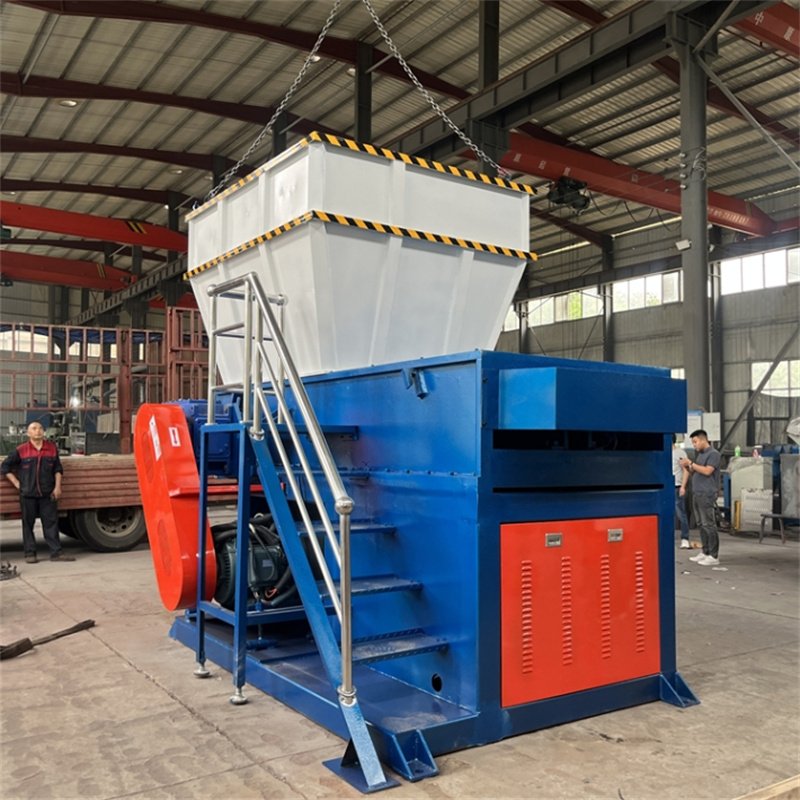
The Single-Shaft Shredder: The Precision Defender
Our single-shaft shredder is for when you need controlled, uniform output from your first line of defense. A hydraulic ram pushes the plastic material into a high-speed cutting rotor. A screen underneath determines the final chip size.
Best for: Clean, rigid plastics like injection molding scrap, pipes, profiles, and reject parts.
Why it works: It provides a predictable, one-step size reduction. If you need a consistent 2-inch chip to feed directly into a wash line, this is your most efficient tool.
The Dual-Shaft Shredder: The Brute Force Defender
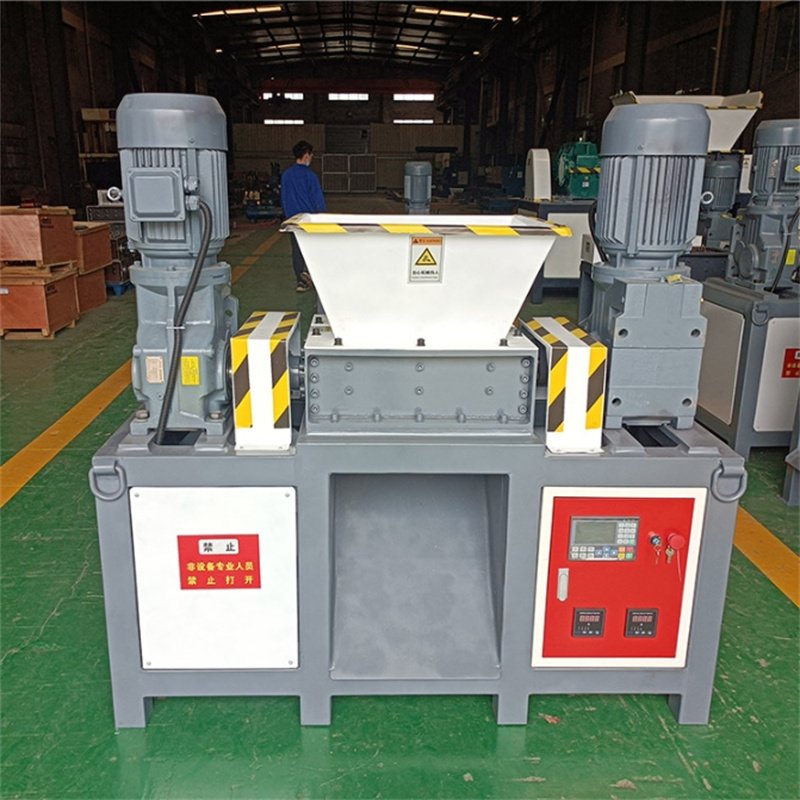
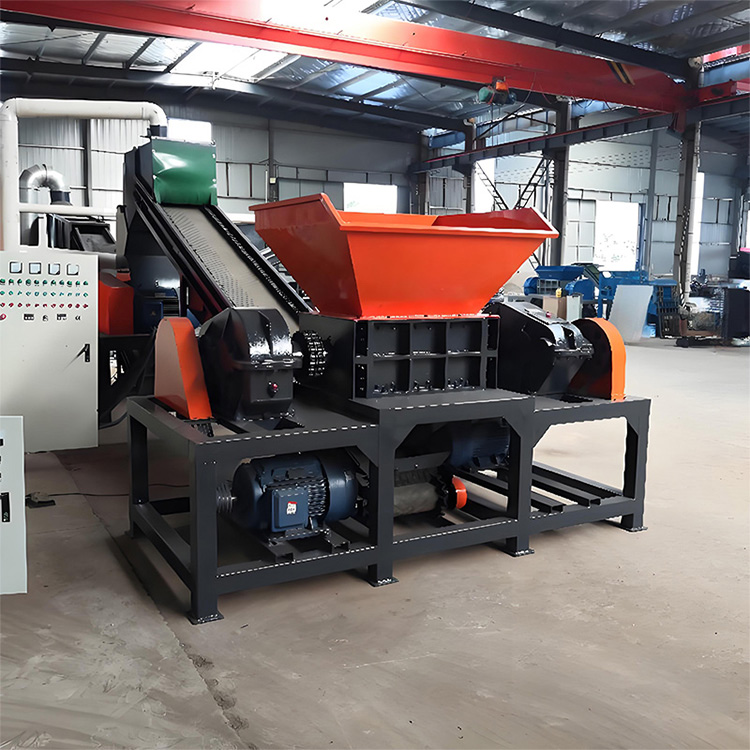
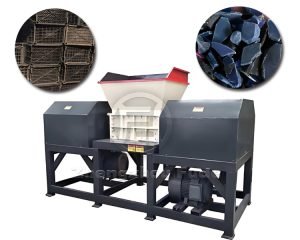
The dual-shaft shredder is the workhorse of the industry. It uses two slow-turning, high-torque shafts with interlocking knives to grab and tear material apart. It has no screen, so output size is less consistent but throughput is very high.
Best for: Bulky items (IBC totes, barrels), mixed plastics, and especially stretchy materials like plastic film.
Why it works: The grabbing and pulling action is perfect for shredding baled film without wrapping. Its high torque allows it to process large, hollow items or contaminated materials with ease. It’s the ultimate tool for pure bulk reduction.
The Four-Shaft Shredder: The High-Security Defender
Our four-shaft shredder offers the best of both worlds. It has two primary cutting shafts and two secondary shafts that work together with a sizing screen mounted below.
Best for: Applications requiring high security or a guaranteed small, uniform output from very tough materials in a single pass. Examples include e-waste, medical plastics, or tough fiber-reinforced materials.
Why it works: It provides the powerful initial shred of a dual-shaft machine with the precise final sizing of a single-shaft machine, all in one compact unit.
FAQ: Your Plastic Shredder Business Questions
Question 1: What is the most difficult plastic to shred? Stretchy materials like LDPE film are notoriously difficult because they can wrap around the shredder shaft instead of being cut. For this, a dual-shaft shredder is the superior choice, as its interlocking knives and stripping fingers are specifically designed to prevent wrapping and ensure continuous processing.
Question 2: What about throughput? How much can a plastic shredder process? Throughput depends entirely on the model, the type of plastic, and the desired output size. A small single-shaft shredder might process a few hundred kilograms per hour, while our largest heavy-duty dual-shaft systems can process over 10 tons per hour of baled material. We work with you to size the machine for your specific production goals.
Question 3: How long do the knives last? Knife life depends on the abrasiveness of the material you are shredding. Our knives are made from hardened D2 tool steel for maximum durability. A key design feature is that the cutters can be rotated (often up to four times) to present a new, sharp cutting edge before needing to be replaced or rebuilt, significantly lowering your operating costs.
Conclusion: Choose Your Defender Wisely
Your primary plastic shredder is the most important investment in your recycling line. It’s the machine that dictates the pace, protects your other equipment, and handles the toughest job on the floor. Don’t settle for a generic solution.
Choosing the right “First Line of Defense”—whether it’s the precision of a single-shaft, the brute force of a dual-shaft, or the security of a four-shaft—is the key to a reliable, efficient, and profitable operation. As a factory-direct manufacturer, we have the expertise and the full range of equipment to help you build the perfect defense for your plastic.
Contact us at Fude Machinery to discuss your material and find the right shredder to lead your line.
About Fude Machinery
We are Fude Machinery, a specialist manufacturer of industrial shredding and recycling systems from Zhengzhou, China. We are a dedicated B2B partner, providing factory-direct, powerful, and reliable solutions for the world’s most demanding recycling applications. With a full range of single, dual, and four-shaft shredders and complete turnkey plants, we equip clients in over 120 countries to turn plastic waste into value.
Factors Affecting Metal Crusher Machine PricesTypes of Metal Crusher Machines and Their PricesDouble Shaft ShredderScrap Metal ShredderComparison of Different Metal CrushersKey Features to Consider When Buying a Metal CrusherMarket Trends in 2026W...
Overview of Copper Wire ShreddersPrice Ranges of Copper Wire Shredders in 2026Factors Influencing Copper Wire Shredder PricesNotable Copper Wire Shredder Models In 2026, copper recycling remains one of the most valuable components in the global su...
What's the Real Difference Between Loose Scrap and Processed Scrap?What Is the Industrial Scrap Metal Recycling Process?Step 1: Collection and SortingStep 2: On-Site ProcessingStep 3: Storing and Selling the Upgraded MaterialWhat Equipment Do You ...
 Fudemetal Crusher