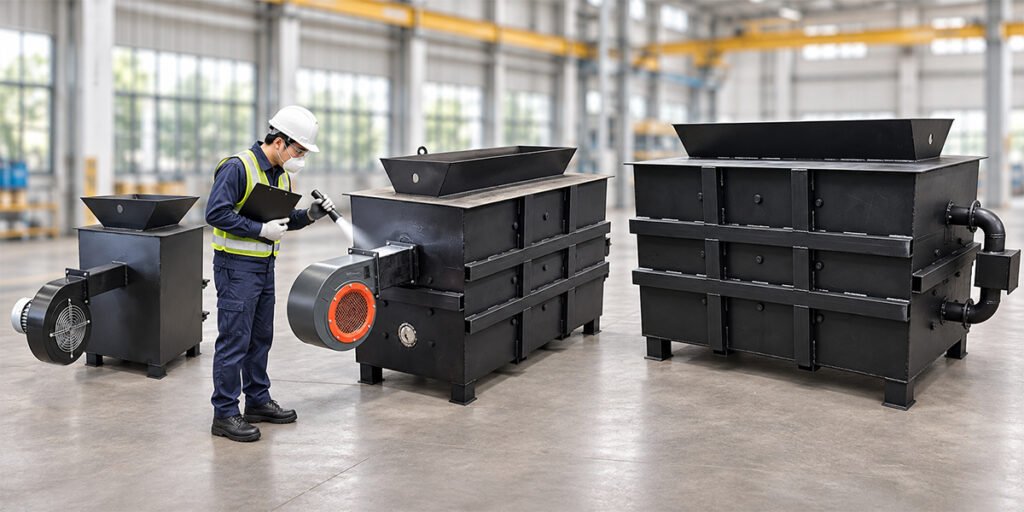
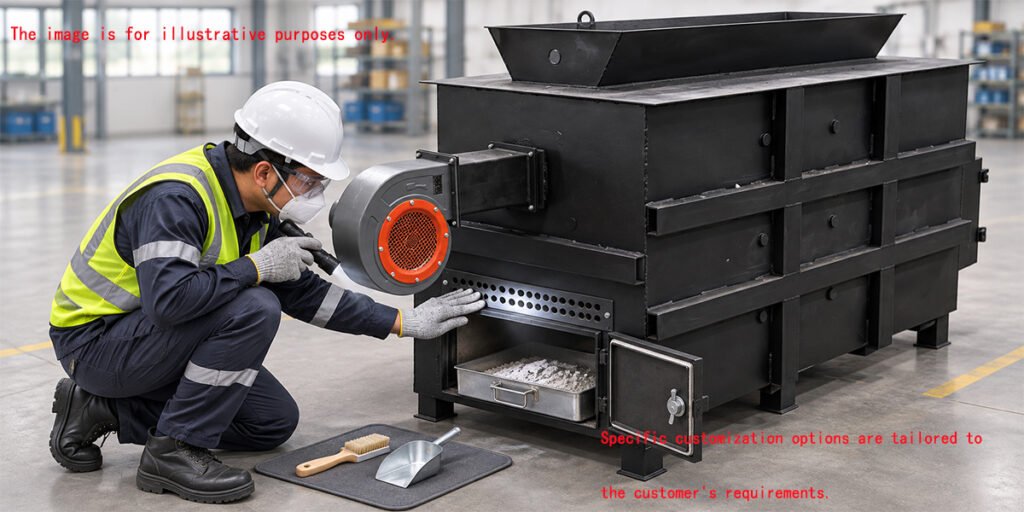
A waste incinerator should be inspected before every startup, cleaned after operation, and maintained according to a daily, weekly, monthly, and annual schedule. Regular maintenance helps prevent black smoke, unstable combustion, blocked airflow, excessive fuel consumption, refractory damage, and unexpected shutdowns.
The exact maintenance interval depends on the equipment design, operating hours, waste composition, moisture content, ash content, and flue-gas treatment system. The manufacturer’s operating manual and applicable local requirements should always take priority over a general checklist.
Table of Contents
Why Is Waste Incinerator Maintenance Important?
A smokeless waste incinerator depends on controlled temperature, airflow, gas movement, and waste feeding. Deposits, damaged seals, blocked air openings, worn electrical components, or ash accumulation can disturb this balance.
Regular maintenance helps operators:
Maintain stable combustion
Reduce visible smoke
Prevent airflow restrictions
Identify refractory damage early
Improve operating safety
Reduce unplanned downtime
Control fuel and electricity consumption
Extend equipment service life
Maintain accurate operating records
Prepare for inspections and emission testing
Maintenance is not limited to repairing failed parts. Its primary purpose is to identify small problems before they become expensive or dangerous failures.
Safety Preparations Before Maintenance
Incinerator maintenance involves hot surfaces, residual fire, electricity, fuel, moving fans, ash, dust, and potentially hazardous residues.
Before opening, cleaning, inspecting, or repairing the equipment:
Stop waste feeding.
Complete the approved burnout procedure.
Shut down the equipment according to the operating manual.
Allow the furnace and ash to cool fully.
Isolate electrical and fuel supplies when required.
Apply lockout and tagout procedures where applicable.
Confirm that fans and moving parts cannot start unexpectedly.
Wear suitable personal protective equipment.
Ventilate the work area.
Use approved tools and access methods.
Never enter a combustion chamber, duct, tank, scrubber, or other confined area without an approved confined-space procedure.
Electrical, burner, fuel, structural, and control-system repairs should be performed by qualified personnel.
Maintenance Schedule at a Glance
Frequency
Main maintenance tasks
Before every startup
Check chamber condition, doors, ash, air supply, fuel and controls
During operation
Monitor temperature, flame, smoke, pressure, fans and feeding
After every operating cycle
Complete burnout, cool safely, remove ash and record observations
Daily
Clean ash areas, inspect seals, air openings, fans and visible surfaces
Weekly
Inspect air ducts, secondary-air nozzles, gas passages and safety devices
Monthly
Check refractory lining, electrical connections, bearings and structural condition
Quarterly
Inspect burners, fans, ducts, chimney and gas-treatment components
Annually
Conduct a complete shutdown inspection and replace worn components
Intervals should be shortened when the incinerator processes high-ash, wet, corrosive, sticky, or highly variable waste.
Before-Startup Inspection Checklist
A short inspection should be completed before every operating cycle.
Check the Combustion Chamber
Confirm that:
Excessive ash has been removed
Air openings are not blocked
No prohibited materials remain inside
The refractory lining has no obvious loose sections
The loading area is clear
No tools or foreign objects remain in the chamber
Check Doors and Seals
Inspect:
Loading door
Ash-removal door
Inspection covers
Door hinges
Latches
Gaskets
Sealing surfaces
Damaged seals can allow uncontrolled air to enter, disturb furnace pressure, and cause smoke leakage.
Check the Air-Supply System
Confirm that:
Primary-air inlets are clear
Secondary-air nozzles are unobstructed
Blower inlets are clean
Dampers move correctly
Fans rotate without unusual noise
Protective guards are secure
Check Electrical and Control Components
Inspect the control panel for:
Fault indicators
Loose switches
Damaged cables
Burn marks
Water or dust entry
Abnormal temperature readings
Do not operate equipment with exposed conductors, damaged insulation, or a repeated electrical fault.
What Should Be Monitored During Operation?
Maintenance includes observing the equipment while it is running.
Operators should record:
Primary-chamber temperature
Secondary-chamber temperature
Waste-loading time
Waste type and quantity
Moisture condition
Flame appearance
Visible exhaust condition
Fan operation
Burner operation
Fuel consumption
Unusual noise or vibration
Ash condition
A gradual change in temperature, fuel use, smoke, or operating time may reveal a developing maintenance problem before a component fails.
Daily maintenance should be completed after the approved shutdown and cooling procedure.
Remove Bottom Ash
Ash accumulation can block airflow and reduce available chamber volume.
During ash removal:
Confirm that the residue is fully cooled
Wear suitable gloves, clothing, respiratory protection, and eye protection
Use non-combustible tools and containers
Prevent dust from spreading
Separate recoverable metal where appropriate
Store ash according to site procedures
Record unusual ash color or unburned material
Ash can remain hot below the surface. Never place apparently cool ash directly into a combustible container.
Clean Primary-Air Openings
Inspect and clean the air openings in the lower chamber or grate area. Blocked openings can cause waste to smolder and produce black smoke.
Inspect Secondary-Air Nozzles
Check visible secondary-air outlets for ash, melted plastic, soot, or other deposits. Do not insert tools into hot nozzles.
Clean the Loading Area
Remove loose waste, ash, oil, and other debris around the feed door. A clean loading area reduces fire, slipping, and contamination risks.
Inspect Door Seals
Look for:
Cracks
Compression damage
Missing sections
Burned areas
Smoke marks
Loose fasteners
Small seal defects should be corrected before they affect furnace pressure.
Check for Leakage
Inspect the furnace, ducts, fuel system, scrubber piping, and surrounding floor for visible gas, liquid, fuel, or ash leakage.
Weekly Waste Incinerator Maintenance
Weekly maintenance focuses on airflow, gas movement, controls, and developing wear.
Inspect Fans and Blowers
Check:
Fan blades
Protective covers
Mounting bolts
Belts or couplings
Bearings
Motor temperature
Noise
Vibration
Dust and debris on fan components can reduce airflow and create imbalance.
Inspect Air Ducts and Dampers
Confirm that ducts are secure and do not have visible cracks or loose connections. Operate dampers through their normal range and check that they remain in the selected position.
Clean Secondary-Air Nozzles
Deposits around the nozzles can reduce gas-and-air mixing. Clean them using the manufacturer’s approved method after the equipment has cooled.
Inspect the Gas-Flow Path
Where accessible without entering a confined space, inspect:
Chamber connections
Duct openings
Spark arrestors
Cyclone inlets
Inspection ports
Chimney connections
Soot or ash accumulation can restrict the draft and contribute to smoke escaping from the loading door.
Test Safety Devices
Check the operation of accessible:
Emergency-stop buttons
Alarm indicators
Door switches
Temperature alarms
Fan interlocks
Burner safety controls
Testing should follow the equipment manual and should not bypass any safety system.
Monthly Waste Incinerator Maintenance
Monthly inspections should examine the furnace structure, refractory condition, controls, and rotating equipment more closely.
Inspect the Refractory Lining
Look for:
Cracks
Loose sections
Spalling
Missing material
Exposed steel
Deformation
Unusual hot spots on the outer shell
Small surface cracks may not require immediate replacement, but growing cracks, loose pieces, or exposed metal require professional evaluation.
Refractory repairs must use the correct material, thickness, installation method, drying time, and curing procedure.
Inspect the Outer Furnace Body
Check welds, panels, supports, hinges, bolts, and structural members for:
Corrosion
Distortion
Cracking
Loose fasteners
Heat discoloration
Mechanical damage
Inspect Electrical Connections
Qualified personnel should check:
Terminal tightness
Contactor condition
Relay operation
Cable insulation
Grounding
Sensor wiring
Motor connections
Control-panel ventilation
The electrical supply must be isolated before internal inspection.
Check Temperature Sensors
Compare temperature readings with normal operating patterns. A sensor that suddenly displays unusually high, low, or unstable values may be damaged, loose, or incorrectly positioned.
Lubricate Approved Components
Lubricate hinges, bearings, and other specified parts using the correct product and interval. Do not apply lubricant to hot surfaces or components that the manufacturer identifies as maintenance-free.
Quarterly Maintenance
Every three months—or more frequently under demanding conditions—conduct a broader inspection.
Remove soot, ash, and deposits from accessible passages using the approved cleaning procedure. Waste containing plastic, rubber, oil, or high ash may require shorter cleaning intervals.
Inspect Flue-Gas Treatment Equipment
Depending on the system, inspect:
Cyclone separator
Scrubber
Pumps
Spray nozzles
Tanks
Filters
Activated-carbon system
Bag filter
Induced-draft fan
Wastewater piping
Consumables and collected residues must be handled according to local requirements.
How Does Waste Type Affect Maintenance Frequency?
Different materials create different maintenance demands.
High-Ash Waste
Waste containing soil, glass, minerals, or large non-combustible fractions requires more frequent ash removal.
Wet Waste
Wet waste can lower temperature, increase deposits, and extend operating time.
Plastic and Foam
These materials can melt, release heat quickly, and create deposits if feeding or combustion is unstable.
Rubber and Oily Waste
Rubber and oily materials can increase soot and gas-treatment requirements.
Agricultural Waste
Branches, straw, bedding, and plant residues may create large amounts of lightweight ash.
Industrial Waste
Industrial materials may contain corrosive chemicals, coatings, chlorine, sulfur, oils, or metals. Their composition must be confirmed before treatment.
Stop or restrict operation and arrange an inspection if you observe:
Persistent black smoke
Smoke escaping from doors
Uncontrolled fire
Fuel leakage
Electrical burning smell
Repeated circuit trips
Unusual vibration
Loud fan or bearing noise
Damaged refractory material
Exposed furnace metal
Abnormal outer-shell temperature
Unstable furnace pressure
Inaccurate temperature readings
Flames entering the loading area
Severe corrosion
Cracked ducts or chimney sections
Do not continue operating equipment when the condition may create a fire, explosion, electrical, structural, or exposure hazard.
Common Maintenance Mistakes
Cleaning the Furnace While It Is Still Hot
Hot ash and refractory material can cause severe burns or ignite nearby materials.
Using Water for Rapid Cooling
Sudden cooling can damage refractory material and deform metal components. Follow the approved cooling procedure.
Ignoring Small Refractory Cracks
Minor defects can grow with repeated heating and cooling cycles.
Operating with Damaged Door Seals
Air leakage can disrupt furnace pressure and combustion.
Waiting Until Airflow Fails
Fans, nozzles, air inlets, and ducts should be inspected before performance noticeably declines.
Using Incorrect Spare Parts
Incorrect sensors, seals, refractory materials, motors, or electrical components may be unsafe or unsuitable for high-temperature service.
Failing to Keep Records
Without records, gradual changes in temperature, fuel use, processing time, and maintenance frequency are difficult to identify.
Recommended Maintenance Record
Each record should include:
Record item
Information to enter
Date and operator
Person responsible for operation
Waste type
Main materials processed
Waste quantity
Batch, hourly or daily quantity
Moisture condition
Dry, moderate or wet
Startup time
Time required to reach stable operation
Operating temperature
Recorded chamber temperatures
Smoke condition
Normal, temporary or persistent
Fuel consumption
Fuel used during startup and operation
Ash condition
Quantity and presence of unburned material
Inspection result
Normal condition or observed defect
Maintenance action
Cleaning, adjustment, repair or replacement
Follow-up required
Responsible person and planned date
Records should be stored according to site procedures and applicable regulations.
Frequently Asked Questions
How Often Should Ash Be Removed?
Ash should be removed according to the waste type, operating hours, and chamber condition. High-ash waste may require cleaning after every cycle. Do not allow residue to block air openings.
How Often Should the Refractory Lining Be Inspected?
Operators should observe visible areas regularly and conduct a closer inspection at least monthly or according to the manufacturer’s schedule. Heavy use or corrosive waste may require more frequent inspection.
Why Is My Incinerator Using More Fuel?
Possible causes include wet waste, low calorific value, damaged refractory lining, air leakage, burner problems, sensor errors, or excessive startup and shutdown cycles.
Can Operators Repair Refractory Damage Themselves?
Minor repairs may be possible only when the operator has received appropriate instructions and uses the correct material. Major cracking, loose sections, exposed steel, or structural damage requires professional assessment.
Why Does the Incinerator Produce Black Smoke After Maintenance?
Possible causes include incorrect damper settings, disconnected secondary air, blocked nozzles, disturbed sensors, poor preheating, unsuitable waste, or excessive feeding. Recheck all serviced components before operation.
Conclusion
An effective waste incinerator maintenance program combines inspections before startup, operating observation, daily cleaning, weekly airflow checks, monthly structural inspections, and planned annual servicing.
The most important maintenance areas are:
Ash removal
Primary and secondary airflow
Fans and blowers
Door seals
Refractory lining
Burners
Temperature sensors
Electrical controls
Gas passages
Chimney and flue-gas treatment equipment
Regular maintenance improves combustion stability, reduces visible smoke, prevents unexpected shutdowns, and extends equipment life.
Fude Machinery supplies smokeless waste incinerators for selected household, agricultural, packaging, commercial, and general industrial waste. We can assist with equipment selection, operating guidance, spare parts, and maintenance recommendations.
For technical support, please provide:
Incinerator model
Equipment serial number, if available
Operating hours
Waste type
Photographs or videos
Description of the problem
Temperature readings
Maintenance history
Installation country or region
Contact Fude Machinery for smokeless incinerator equipment, customized configurations, spare parts, and technical support.
If your business handles Styrofoam, you know the problem. It is bulky, takes up huge amounts of space, and is very expensive to transport and dispose of. A Styrofoam compactor is a machine that solves this problem. It dramatically reduces the volu...
The demand for metal crusher machines continues to rise as industries require efficient methods to process metal waste, enhance recycling, and reduce environmental impact. Prices in 2026 will be influenced by raw material costs, manufacturing adva...
End-of-life vehicles (ELVs) are a challenge for every developed economy. They are complex objects made of dozens of different materials. To most, they are a waste problem. To a savvy industrialist, they are an untapped resource. The key to unlocki...
 Fudemetal Crusher