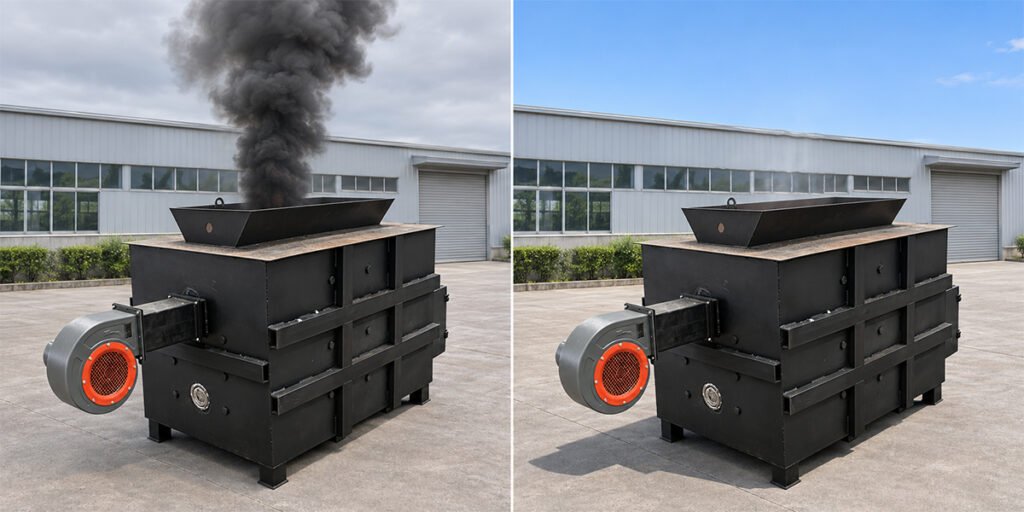
A waste incinerator usually produces black smoke when combustible gases and carbon particles are not being burned completely. Common causes include excessive feeding, wet waste, insufficient combustion air, low furnace temperature, poor secondary combustion, blocked air passages, unsuitable materials, and inadequate maintenance.
Black smoke should not be considered normal continuous operation. If it persists, operators should reduce or stop waste feeding, stabilize the combustion process, inspect the equipment, and identify the cause before returning to the normal loading rate.
Table of Contents
What Does Black Smoke Mean?
Black smoke commonly contains soot, carbon particles, condensed organic material, and products of incomplete combustion. It indicates that part of the waste or the gases released from it did not receive the correct combination of temperature, oxygen, mixing, and combustion time.
A short period of visible smoke may occur during startup or after an operating change. Persistent black smoke, however, may indicate:
Incorrect waste feeding
Low combustion temperature
Excessive moisture
Insufficient primary or secondary air
Poor gas mixing
Unsuitable waste
Equipment blockage
Burner or fan problems
Damaged seals or refractory lining
Inadequate flue-gas treatment
The color of the exhaust alone cannot identify every pollutant. A clear-looking exhaust also does not prove regulatory compliance. Proper operation and required emission testing remain essential.
1. Too Much Waste Is Loaded at Once
Overfeeding is one of the most common causes of black smoke.
When a large quantity of cold waste enters the primary chamber, it can:
Lower the furnace temperature
Cover the existing fire
Restrict airflow through the waste bed
Release more combustible gas than the secondary chamber can handle
Create uneven combustion
Increase unburned carbon and soot
The problem is especially serious with plastic, rubber, foam, textiles, and other materials that release combustible gases quickly.
Corrective Action
Reduce or temporarily stop feeding. Allow the existing waste to burn and the furnace temperature to recover. Resume with smaller, more consistent quantities.
Do not try to solve an overfeeding problem simply by adding more waste or opening the feed door repeatedly.
2. The Waste Contains Too Much Moisture
Wet waste absorbs heat because the water must evaporate before the combustible material can burn effectively.
High-moisture waste may cause:
Slow ignition
Low primary-chamber temperature
Increased white vapor
Unstable flames
Black smoke from incomplete combustion
Higher auxiliary fuel consumption
Longer processing time
Common high-moisture materials include:
Kitchen waste
Food-contaminated packaging
Fresh leaves and branches
Wet textiles
Sludge
Animal bedding
Waste stored outdoors in rain
Corrective Action
Separate excessively wet material where possible. Consider drying, draining, dewatering, or mixing it gradually with suitable dry combustible waste.
The correct mixing ratio depends on the waste composition and furnace design. Wet waste should not be hidden under a layer of dry waste and loaded as one large batch.
3. The Furnace Has Not Reached a Stable Temperature
Combustion is often unstable during startup because the furnace walls, air passages, secondary chamber, and gas path are still cold.
If waste is loaded before sufficient preheating, combustible gases may leave the primary chamber without burning completely.
Corrective Action
Follow the manufacturer’s startup procedure. Establish a stable fire and allow the combustion zones to warm before increasing the waste-feeding rate.
Startup requirements depend on:
Furnace size
Ambient temperature
Waste type
Refractory condition
Auxiliary burner configuration
Required operating temperature
Operators should monitor the actual temperature instead of relying only on visual flame appearance.
4. The Primary Air Supply Is Insufficient
Primary air supports the combustion of solid waste inside the main chamber. If too little air reaches the waste bed, the material may smolder and produce large amounts of smoke.
Possible causes include:
Blocked air inlets
Ash accumulation
A malfunctioning blower
Closed or incorrectly adjusted dampers
Waste packed too tightly
An overloaded chamber
Damaged air-distribution components
Corrective Action
Check the primary-air fan, ducting, dampers, and air openings. Remove ash or waste blocking the airflow after the equipment has been safely shut down and cooled according to the operating manual.
Do not introduce uncontrolled air by leaving the loading door open. Excess air entering through the wrong location can disturb furnace pressure and gas flow.
5. The Secondary Air Supply Is Insufficient
Waste does not burn only as a solid material. Heating and pyrolysis release combustible gases, vapors, tar, and carbon particles.
These gases move from the primary chamber into the secondary combustion area. Additional air is required to mix oxygen with the gases and support more complete oxidation.
If the secondary air is insufficient, black smoke may remain even when the solid waste appears to be burning strongly.
Corrective Action
Inspect:
Secondary-air blower operation
Air nozzles
Ducting
Dampers
Electrical connections
Temperature controls
Gas-flow path
The air setting must match the waste-feeding rate. More air is not always better; excessive air can cool the chamber and shorten the effective gas residence time.
Complete combustion requires oxygen to mix effectively with combustible gases. A furnace may have enough total air but still produce smoke if the air and gases do not mix correctly.
Poor mixing may result from:
Blocked secondary-air nozzles
Incorrect air direction
Damaged internal components
Abnormal furnace pressure
Excessive gas production
Deposits inside the gas passage
An unsuitable chamber design
Corrective Action
Inspect and clean the air nozzles and internal gas passages according to the maintenance schedule. If the problem continues, ask the equipment manufacturer to evaluate airflow distribution and furnace pressure.
7. The Waste Releases Heat Too Quickly
High-calorific-value materials can release large quantities of heat and combustible gases in a short time.
Examples may include:
Foam packaging
Plastic film
Rubber
Oil-contaminated absorbents
Synthetic textiles
Selected industrial scraps
Loading too much high-calorific-value waste can exceed the capacity of the available air supply and secondary combustion system.
Corrective Action
Identify the material and reduce its feeding rate. Introduce small quantities gradually and, where suitable, mix it with a more stable compatible waste stream.
Unknown plastic, chemically contaminated material, PVC, batteries, pressurized containers, electronic waste, and hazardous materials should not be placed in a general-purpose incinerator.
Low-calorific-value waste may not release enough heat to maintain stable combustion.
Examples include:
Very wet organic waste
Soil-contaminated waste
Sludge
Waste containing large amounts of glass or metal
Mixed waste with a high inert-material content
Corrective Action
Sort out non-combustible materials. Dry or dewater the waste where possible. Auxiliary fuel or controlled mixing with suitable dry combustible material may be required.
Equipment should be selected according to the real waste stream rather than only its daily weight.
9. The Waste Is Too Large or Densely Packed
Oversized materials and tightly compressed waste can restrict airflow and create cold areas inside the chamber.
Potential problem materials include:
Large cardboard bundles
Rolled textiles
Thick rubber pieces
Large wood sections
Compressed plastic film
Full garbage bags
Bulky industrial packaging
Corrective Action
Open bags and inspect the contents before loading. Cut or shred oversized materials where necessary. Avoid placing tightly packed bundles directly over air openings.
Material preparation should produce a reasonably consistent feed without creating excessive dust.
10. Ash Is Blocking the Airflow
Bottom ash and unburned residue can accumulate around air openings, grates, or the lower combustion area.
This reduces oxygen distribution and may cause the next load to smolder.
Corrective Action
Remove ash at the recommended interval. Do not wait until the chamber is heavily filled.
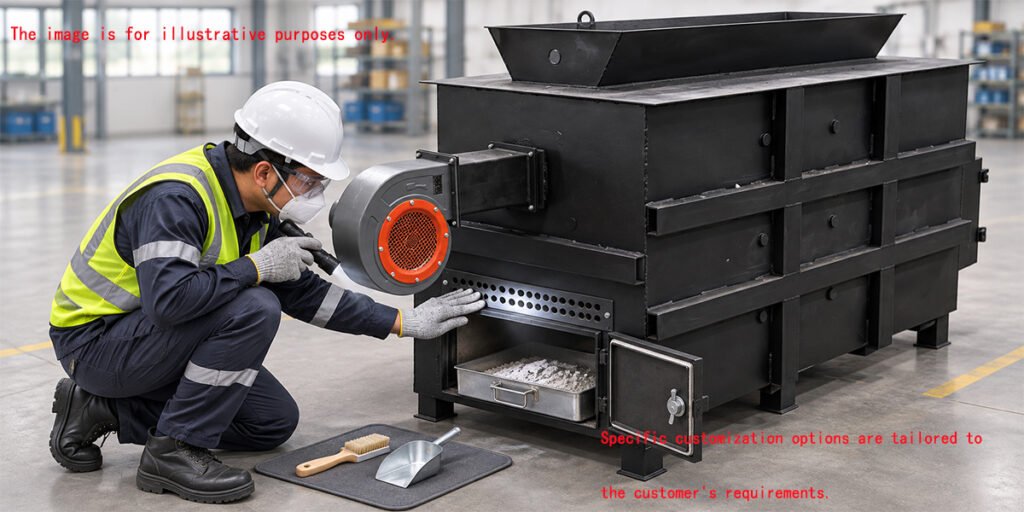
Ash removal should only be performed after following the required shutdown, cooling, personal-protection, and fire-prevention procedures. Ash may remain hot even when it appears cool on the surface.
11. The Blower or Burner Is Not Working Correctly
Mechanical or electrical faults can cause sudden smoke even when the waste and feeding procedure have not changed.
Possible faults include:
Blower motor failure
Reduced fan speed
Loose electrical connection
Blocked fan inlet
Damaged belt or coupling
Burner ignition failure
Fuel-supply interruption
Faulty temperature sensor
Incorrect controller setting
Corrective Action
Stop or reduce feeding and check the operating indicators. Follow the manufacturer’s troubleshooting procedure.
Electrical, fuel, and burner repairs should be carried out only by qualified personnel.
12. Air Leaks Are Disturbing Furnace Pressure
A controlled incinerator is designed to move air and gases along a defined path. Damaged doors, seals, inspection covers, ducts, or ash-removal openings can allow uncontrolled air to enter.
Air leakage may:
Cool the combustion chamber
Change furnace pressure
Disrupt secondary combustion
Pull smoke toward the wrong location
Reduce the effectiveness of the induced-draft system
Corrective Action
Inspect door seals, gaskets, access covers, welds, duct connections, and ash-removal doors. Replace damaged sealing materials and verify furnace pressure before returning to normal operation.
13. The Refractory Lining Is Damaged
The refractory lining retains heat and protects the furnace body. Cracks, missing sections, or severe wear can create cold spots and reduce combustion stability.
Warning signs include:
Exposed metal surfaces
Falling refractory pieces
Unusual hot spots on the outer shell
Longer preheating time
Increased fuel use
Repeated smoke problems
Corrective Action
Schedule an internal inspection after the equipment has been shut down and fully cooled. Repair damaged refractory material using the correct specification and curing procedure.
14. The Gas Path or Chimney Is Restricted
Deposits, ash, soot, or foreign objects inside the gas path can reduce draft and prevent combustion gases from moving correctly.
Possible symptoms include:
Smoke escaping from the feed door
Weak furnace draft
Unstable flames
Increased soot
Unusual pressure readings
Reduced fan performance
Corrective Action
Inspect and clean the gas passages, ducts, spark arrestor, cyclone, filters, scrubber components, and chimney according to the system design.
Do not enter confined areas or hot gas passages without proper isolation and safety procedures.
Black Smoke Troubleshooting Table
Observation
Possible cause
First action
Smoke begins immediately after loading
Overfeeding or wet waste
Stop feeding and allow temperature to recover
Smoke occurs mainly during startup
Insufficient preheating
Extend the controlled warm-up period
Strong fire but dark exhaust
Insufficient secondary air or poor gas mixing
Check secondary-air system
Waste smolders in the primary chamber
Insufficient primary air
Check air inlets, ash and blower
Smoke increases with foam or plastic
Feeding rate too high
Reduce and control material feeding
Smoke escapes from the door
Restricted gas path or pressure problem
Stop feeding and inspect the draft system
Smoke continues with normal waste
Fan, burner, sensor or maintenance problem
Inspect equipment components
Smoke returns after ash buildup
Blocked lower airflow
Cool, clean and inspect the ash area
This table provides initial guidance only. The operator should follow the manufacturer’s manual and site safety procedures.
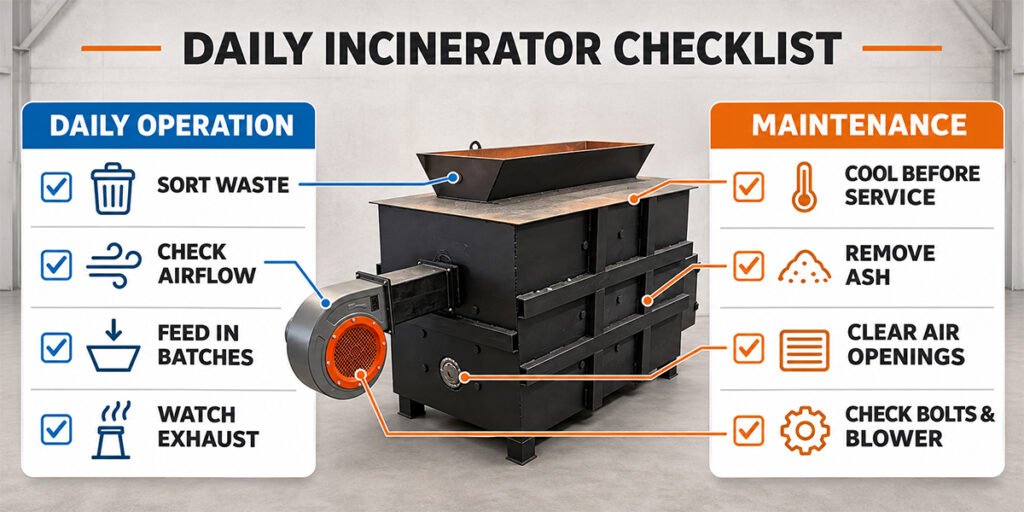
Immediate Steps When Black Smoke Appears
When persistent black smoke is observed:
Do not add more waste.
Reduce or stop feeding safely.
Check temperature readings.
Observe the primary and secondary flames through approved viewing points.
Verify blower and burner operation.
Check whether the latest waste was unusually wet or high in plastic.
Allow the existing charge to stabilize.
Follow the shutdown procedure if the condition continues.
Record the waste type, loading time, temperature, and operator actions.
Inspect the equipment after it has cooled safely.
Do not open the loading door suddenly or attempt unapproved adjustments while flames or combustible gases are present.
Store waste under cover and separate excessively wet material.
Prepare the Material
Open bags, reduce oversized pieces, and avoid tightly packed loads.
Preheat Correctly
Wait until stable combustion conditions are established before increasing the feed rate.
Feed Gradually
Use smaller, consistent quantities instead of loading the chamber completely at once.
Monitor Temperature
Record primary- and secondary-chamber temperatures where instruments are provided.
Maintain the Air System
Clean air inlets, nozzles, fans, ducts, and dampers.
Remove Ash Regularly
Do not allow residue to block the designed air path.
Keep Operating Records
Record the waste type, quantity, moisture condition, feeding time, temperature, smoke condition, fuel consumption, and maintenance actions.
Does “Smokeless” Mean There Will Never Be Visible Smoke?
No. “Smokeless” generally describes a system designed to reduce visible smoke through controlled, multi-stage combustion.
Performance still depends on:
Waste selection
Moisture content
Loading rate
Temperature
Air distribution
Gas residence time
Equipment condition
Operator training
Flue-gas treatment
Even a correctly designed incinerator can produce smoke if it is overloaded, operated cold, supplied with unsuitable waste, or poorly maintained.
When Is Additional Flue-Gas Treatment Required?
Secondary combustion reduces unburned gases and visible carbon particles, but it may not remove every regulated pollutant.
Depending on the waste and local requirements, a system may also require:
Cyclone separation
Gas cooling
Dry or wet scrubbing
Activated carbon treatment
Bag filtration
Draft control
Emission monitoring
Visible-smoke performance and legal emission compliance are related but not identical. Local regulations and representative testing determine the required configuration.
A short period of visible smoke may occur while the furnace is warming, but persistent black smoke indicates incomplete combustion or an operating problem. Waste feeding should remain limited until stable conditions are reached.
Why Does the Incinerator Smoke After New Waste Is Added?
The new waste may be too wet, too cold, too dense, or loaded too quickly. It can lower furnace temperature and release more combustible gas than the secondary chamber can process.
Can I Increase the Air Supply to Stop Black Smoke?
Air adjustment may help, but simply maximizing airflow is not always correct. Excess air can cool the furnace and disturb gas residence time. Primary and secondary air must be balanced with the waste and feeding rate.
Why Does Plastic Produce So Much Black Smoke?
Plastic can release heat and combustible gases rapidly. When the furnace lacks sufficient temperature, oxygen, mixing, or residence time, these gases may form soot and visible black smoke.
Can Wet Waste Be Mixed with Dry Waste?
Controlled mixing may improve combustion, but the correct ratio depends on the waste and equipment. Excessively wet waste may need drying or dewatering before incineration.
Does Clear Exhaust Mean the Emissions Meet Standards?
Not necessarily. Some pollutants are invisible. Regulatory compliance must be confirmed through the required monitoring or testing methods.
When Should I Contact the Manufacturer?
Contact the manufacturer if black smoke continues after correcting the waste feed, moisture, temperature, airflow, ash buildup, and routine maintenance—or if the equipment shows pressure, refractory, burner, fan, or control-system problems.
Conclusion
Black smoke from a waste incinerator usually indicates incomplete combustion. The most common causes are overfeeding, wet waste, low temperature, insufficient air, poor gas mixing, unsuitable materials, ash accumulation, blocked gas passages, and equipment faults.
Operators should stop adding waste, stabilize the furnace, check temperature and airflow, and investigate the most recent change in waste or operating conditions. Persistent smoke should never be ignored.
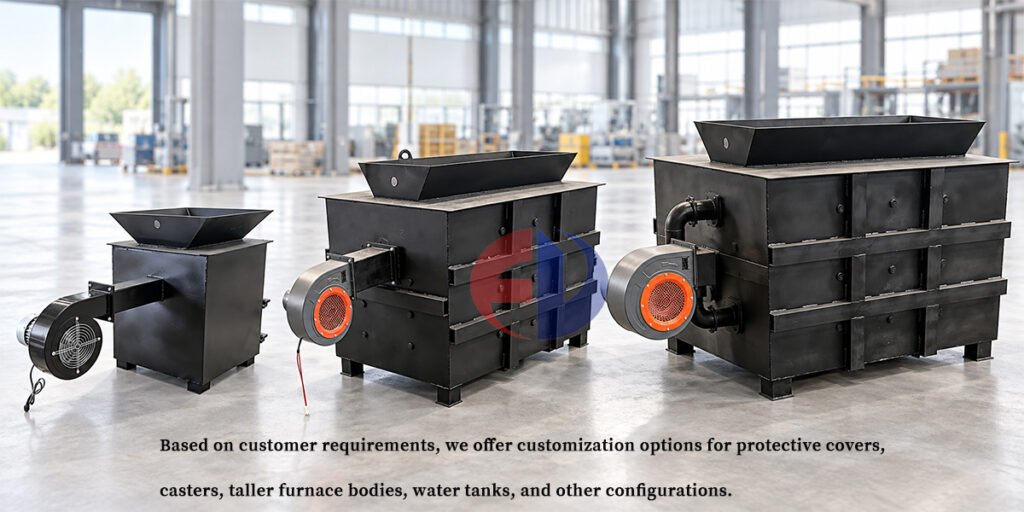
Fude Machinery provides smokeless waste incinerators for selected household, agricultural, packaging, commercial, and general industrial waste applications. We can help evaluate waste composition, combustion conditions, air-supply configuration, and equipment capacity.
For troubleshooting or equipment selection, please provide:
Incinerator model
Waste type and source
Photos or videos of the waste
Video of the smoke condition
Loading quantity and frequency
Estimated moisture content
Primary- and secondary-chamber temperatures
Fan and burner status
Installation country or region
Local emission requirements
Contact Fude Machinery for technical evaluation, customized equipment, maintenance guidance, and waste-incineration solutions.
Your business deals with a lot of polystyrene foam (EPS). You already know it is a problem. It fills your dumpsters, takes up huge areas of your factory, and costs a fortune to get rid of. A polystyrene melting machine is the ultimate solution to ...
Plastic waste is not one single material. It's a vast category, from tough, solid industrial purgings to thin, stretchy agricultural film and everything in between. Using the wrong machine to process your specific type of plastic is the fastest wa...
Industrial shredders are large machines used to break down waste materials into smaller, manageable sizes. These machines are an essential part of many industries, including recycling, manufacturing, and waste management. By shredding materials su...
 Fudemetal Crusher