 Fudemetal Crusher
Introduction to Metal Waste Packaging Machine
1046Metal waste packaging machine is a mechanical equipment specifically designed for processing metal waste
View detailsSearch the whole station
Smokeless incinerators can process a wide variety of combustible solid wastes, including municipal solid waste, paper, cardboard, textiles, wood, agricultural residues, packaging materials, and certain types of general industrial waste. Fude Machinery recommends conducting a comprehensive assessment of the waste’s composition, moisture content, calorific value, equipment configuration, and local environmental regulations before operating a smokeless waste incinerator.
“Smokeless” does not mean that the equipment produces absolutely no emissions. It means that controlled airflow, high-temperature combustion, and secondary combustion are used to reduce visible smoke, odors, carbon particles, and unburned gases. Actual performance depends on correct waste preparation, feeding, operation, and emission-control configuration.
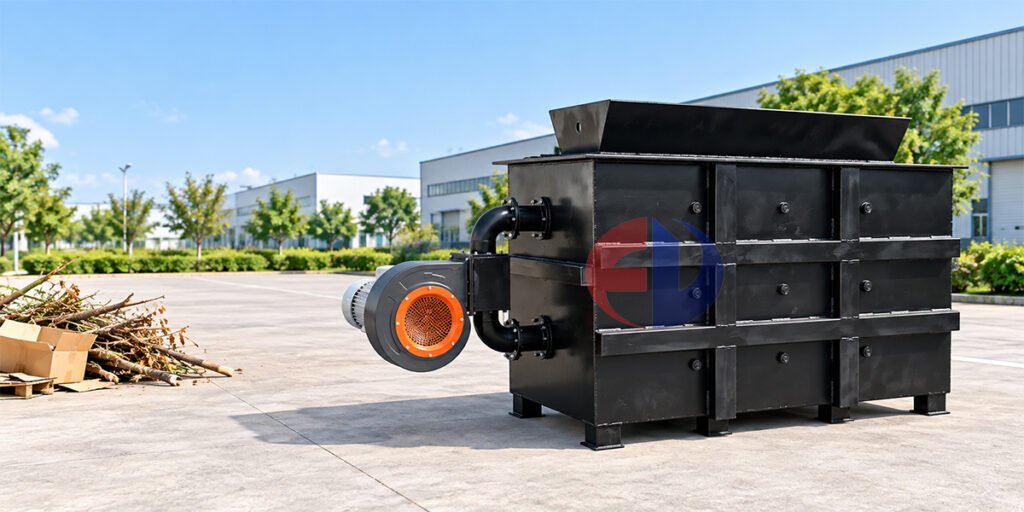
The most suitable materials are combustible wastes with relatively stable composition and enough calorific value to maintain effective combustion. Materials with excessive moisture, large amounts of non-combustible matter, or hazardous chemical components may require sorting, drying, shredding, special treatment, or a different type of incinerator.
The following categories represent common potential applications.
A smokeless incinerator can be used to process selected combustible materials found in household and community waste, such as:
This type of equipment may be useful in villages, residential communities, schools, hotels, construction camps, tourist attractions, islands, and other locations where transporting waste to a distant treatment facility is expensive or inconvenient.
Household waste should be sorted before incineration. Glass, stones, metals, batteries, pressurized containers, and other non-combustible or dangerous materials should be removed. Wet kitchen waste should also be separated or mixed carefully with drier, higher-calorific-value material.
Many factories produce combustible production waste that may be suitable for a properly selected industrial waste incinerator. Examples include:
Industrial waste must be evaluated according to its chemical composition—not only its appearance. Two materials that look similar can produce very different gases when heated.
Factories should provide the incinerator manufacturer with a detailed waste list, daily waste quantity, moisture content, material size, and available safety information. Waste containing chlorine, fluorine, sulfur, heavy metals, solvents, oils, coatings, or unknown additives may require specialized equipment and additional flue-gas treatment.
Smokeless incinerators can also be considered for selected agricultural, forestry, and landscaping waste, including:
Agricultural waste is often bulky and uneven in size. Shredding or cutting large materials before feeding can improve loading efficiency and combustion stability.
Moisture is another important factor. Fresh branches, wet leaves, and recently harvested plants may contain too much water to burn efficiently on their own. Drying the material or combining it with dry, high-calorific-value waste can help maintain a stable furnace temperature.
Paper, cardboard, untreated wood, and many natural-fiber textiles usually have good combustibility when they are reasonably dry.
Before incineration, operators should check for:
Recyclable materials should be recovered whenever practical. Incineration is generally more suitable for contaminated, damaged, or otherwise non-recyclable combustible material.
Selected plastics, foams, and rubber materials may be processed by appropriately configured incineration systems, but these wastes require particular care.
Some plastics have a high calorific value and can cause rapid temperature increases if too much is added at once. Other plastics may contain chlorine, flame retardants, plasticizers, heavy metals, or unknown additives. These components can affect emissions, ash characteristics, furnace temperature, and flue-gas treatment requirements.
Before processing plastic or rubber waste, confirm:
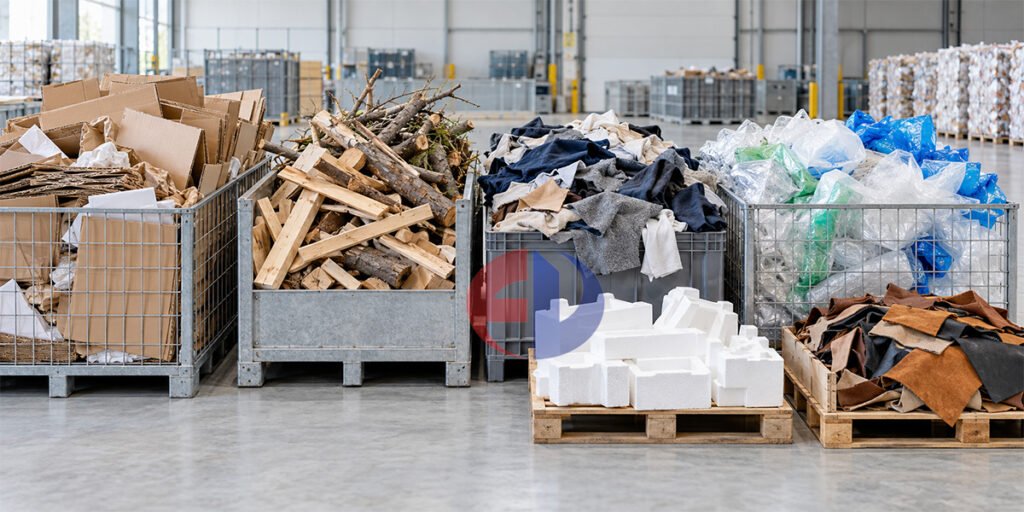
Certain specially designed incinerators can process medical or sanitary waste, such as used dressings, masks, protective clothing, and selected disposable medical supplies.
However, medical waste is regulated separately in many countries. Infectious, pathological, pharmaceutical, chemical, and sharps waste may require dedicated equipment, specific combustion temperatures, documented retention time, secure ash handling, operator training, and approved emission-control systems.
A general household or industrial waste incinerator should not be promoted as suitable for medical waste unless its design, test data, and local approvals support that application.
Some combustible waste can be processed only after preparation. Common pre-treatment methods include:
Remove glass, metals, stones, batteries, pressure vessels, electronic components, and hazardous materials.
Cut or shred oversized wood, textiles, packaging, and bulky waste to provide more consistent feeding and combustion.
Reduce the moisture content of kitchen waste, plants, sludge-like materials, and other wet waste before feeding.
Mix low-calorific-value waste with suitable dry combustible material to maintain more stable combustion. The mixing ratio should be confirmed through testing.
Avoid loading a large amount of high-calorific-value plastic, rubber, or foam at one time. Controlled feeding helps prevent temperature fluctuations, excessive flames, incomplete combustion, and visible smoke.
The following materials should not be placed in a general-purpose incinerator without professional assessment and legal authorization:
These materials may cause explosions, equipment damage, toxic emissions, contaminated ash, or serious injury. When the composition is unknown, the material should be treated as unsuitable until it has been identified.
We recommend that you first familiarize yourself with your raw materials so we can customize a smokeless incinerator that meets your needs.
High-moisture waste absorbs heat because the water must evaporate before the material can burn effectively. Excessively wet waste can lower the furnace temperature, increase fuel consumption, cause unstable combustion, and produce more visible smoke or odor.
Common high-moisture materials include:
For this reason, waste moisture should be considered together with calorific value and feeding rate. Drying, dewatering, or mixing wet waste with suitable dry material may improve operating stability.
Choosing an incinerator based only on the total weight of the waste is not enough. Buyers should provide the following information:
| Required Information | Why It Matters |
|---|---|
| Waste type | Determines combustion and emission-control requirements |
| Daily waste quantity | Helps calculate the required capacity |
| Operating hours per day | Converts daily volume into an hourly or batch requirement |
| Moisture content | Affects combustion stability and fuel consumption |
| Calorific value | Indicates whether auxiliary fuel may be required |
| Maximum material size | Determines the feed opening and need for shredding |
| Waste density | Affects chamber volume and loading frequency |
| Chemical composition | Identifies hazardous or corrosive components |
| Installation location | Affects layout, ventilation, power supply, and transport |
| Local emission rules | Determines the required system configuration |
A representative waste sample or detailed photographs can help the manufacturer make a preliminary assessment. For complex industrial waste, a material composition report and controlled combustion test may also be necessary.
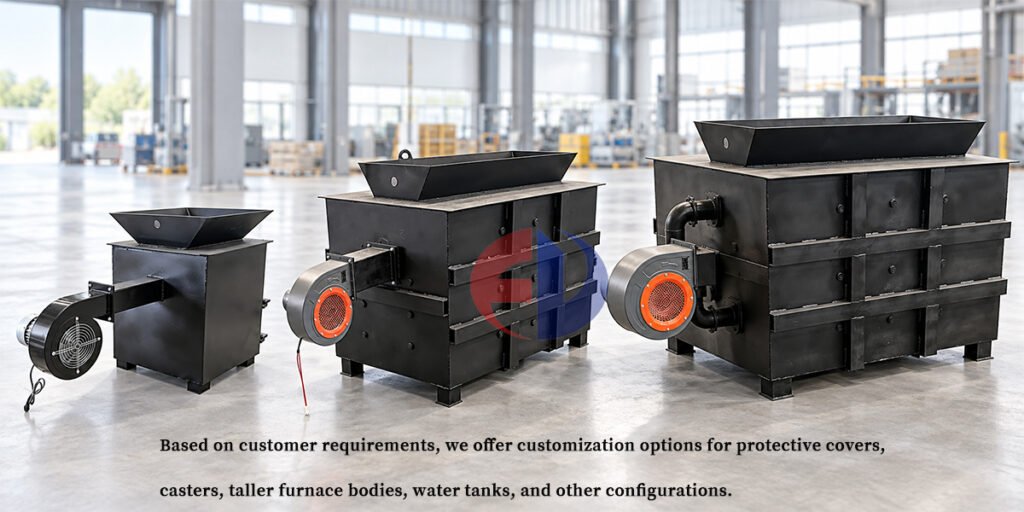
Waste sorting improves safety, combustion stability, and equipment life. It can also reduce the amount of ash and prevent recyclable materials from being destroyed unnecessarily.
A practical sorting process should separate waste into:
Even a multi-purpose incinerator works best when it receives a controlled and reasonably consistent waste stream.
It can process many combustible components of household garbage, including paper, cardboard, textiles, wood, packaging, and selected mixed waste. Batteries, glass, metals, pressurized containers, electronic waste, and hazardous materials must be removed first.
It may process selected non-hazardous combustible industrial waste. The material composition must be evaluated before operation because industrial scraps can contain coatings, chlorine, chemicals, heavy metals, or other substances requiring specialized treatment.
Small amounts of wet waste may be mixed with suitable dry, high-calorific-value material. Waste with excessive moisture may require drying or dewatering. Feeding too much wet material can lower the combustion temperature and produce unstable operation.
Some plastic waste may be incinerated in an appropriately designed system, but the plastic type and additives must be identified. PVC, halogenated plastics, chemically contaminated plastics, and unknown mixed plastics require particular caution and may need advanced flue-gas treatment.
No. “Smokeless” generally refers to reducing visible smoke through controlled, high-temperature, multi-stage combustion. All combustion processes produce gases and residues. Actual emission performance must be verified under real operating conditions and evaluated against local regulations.
Not always. Dry waste with sufficient calorific value may support combustion after startup. Wet or low-calorific-value waste may require auxiliary fuel or controlled mixing with suitable combustible material.
A smokeless incinerator can process a broad range of household, agricultural, commercial, and general industrial combustible waste. Its suitability depends on more than whether a material can catch fire. Moisture, calorific value, chemical composition, feeding rate, equipment design, flue-gas treatment, and local regulations all affect safe and effective operation.
The best results begin with proper waste identification and sorting. Buyers should never select an incinerator based only on price or nominal capacity.
Fude Machinery provides smokeless waste incinerator solutions for different waste types and processing requirements. To recommend a suitable model and configuration, please send us:
Contact Fude Machinery for equipment selection, customized specifications, and waste-processing advice.
Important Notice: Waste-incineration rules vary by country and region. Equipment selection, installation, operation, emissions testing, ash disposal, and waste acceptance must comply with applicable local laws and permit conditions.
Metal waste packaging machine is a mechanical equipment specifically designed for processing metal waste
View details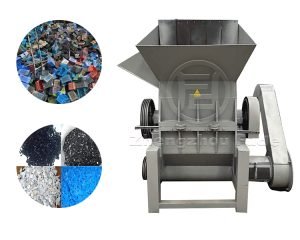
Plastic bottle crusher is a high-efficiency crushing equipment designed specifically for plastic products such as plastic bottles and fruit baskets.
View details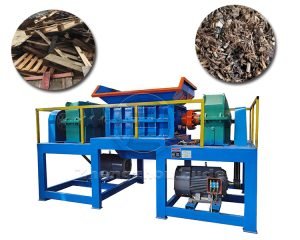
A shredder is an important mechanical equipment widely used in the processing and recycling of various waste materials.
View details
If your business handles Styrofoam, you know the problem. It is bulky, takes up huge amounts of space, and is very expensive to transport and dispose of. A Styrofoam compactor is a machine that solves this problem. It dramatically reduces the volu...
View details