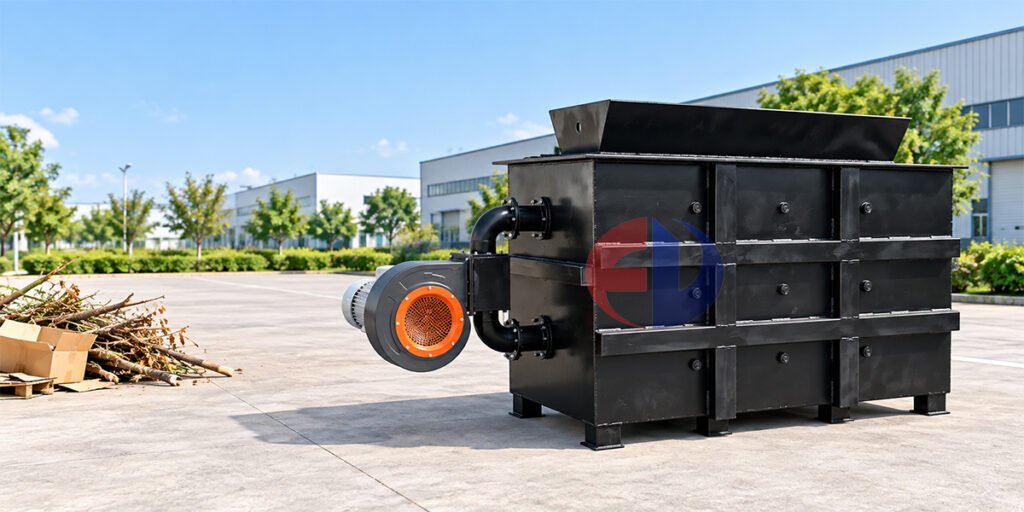
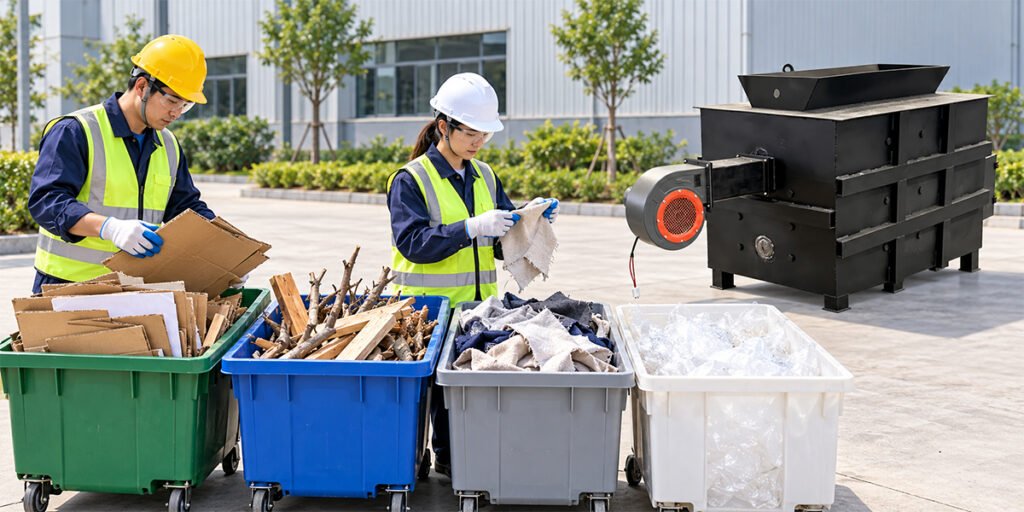
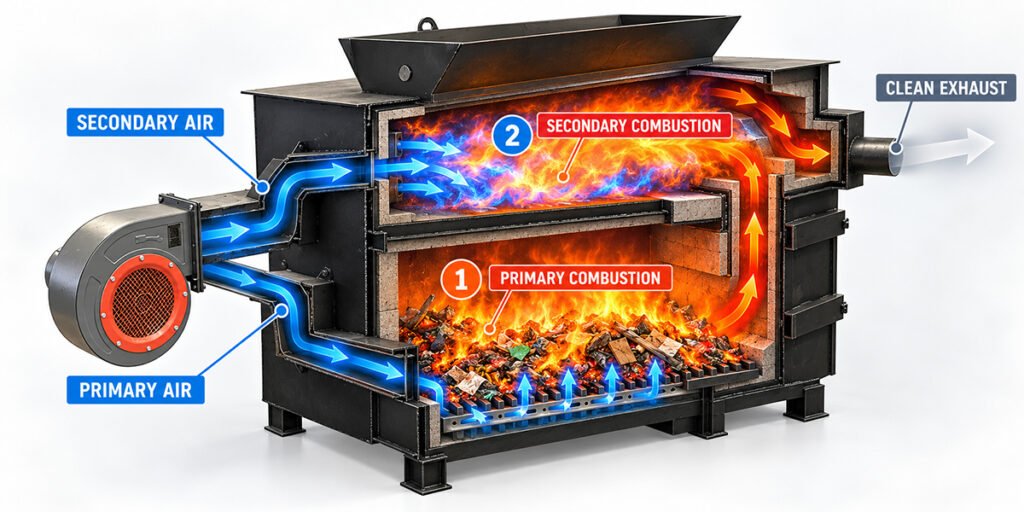
A smokeless waste incinerator works by controlling temperature, airflow, combustion time, and gas movement inside the furnace. Waste is first dried and thermally decomposed in the primary chamber. The combustible gases and smoke particles produced during this stage then enter a high-temperature secondary combustion area, where additional air helps burn them more completely.
This multi-stage process can significantly reduce visible smoke, odors, unburned carbon, and the final volume of waste. However, “smokeless” does not mean zero emissions. Actual performance depends on the waste composition, moisture content, operating method, equipment configuration, and flue-gas treatment system.
Table of Contents
What Is a Smokeless Incinerator?
A Smokeless Incinerator is a controlled combustion system designed to process suitable combustible waste while reducing the visible smoke commonly associated with open burning or simple single-chamber furnaces.
Instead of allowing waste and smoke to burn under uncontrolled conditions, the equipment manages the combustion process through:
A primary combustion chamber
Controlled primary air supply
Waste drying and thermal decomposition
A secondary combustion zone
Additional high-temperature air
An extended gas-flow path
Heat-resistant furnace materials
Controlled feeding and ash removal
Optional flue-gas cleaning equipment
The objective is to provide sufficient temperature, time, oxygen, and mixing so that combustible solids and gases can burn more completely.
The Basic Working Process
The operation of a smokeless waste incinerator can be divided into seven main stages:
Waste sorting and preparation
Ignition and furnace preheating
Waste feeding and drying
Pyrolysis and primary combustion
Secondary high-temperature combustion
Flue-gas discharge or purification
Ash cooling and removal
Each stage affects the stability and environmental performance of the complete system.
Stage 1: Waste Sorting and Preparation
The combustion process begins before waste enters the furnace. Operators must identify, sort, and prepare the material according to the incinerator’s design.
Suitable waste may include selected:
Household combustible waste
Paper and cardboard
Textiles
Wood and branches
Agricultural residues
Packaging materials
General commercial waste
Non-hazardous industrial scraps
Batteries, aerosol cans, gas cylinders, sealed containers, electronic waste, glass, large metal objects, radioactive materials, asbestos, and unidentified chemicals must be removed.
Oversized waste may need to be cut or shredded. Wet material may require drying, dewatering, or controlled mixing with suitable dry waste.
Good preparation improves airflow, helps stabilize furnace temperature, and reduces the risk of smoke caused by overloading or unsuitable materials.
Stage 2: Ignition and Furnace Preheating
Before normal feeding begins, the combustion chamber must reach a stable operating condition.
Depending on the equipment and waste characteristics, ignition may use dry wood, charcoal, diesel-assisted ignition, gas burners, or another approved auxiliary fuel. The purpose is to establish a stable heat source—not to fill the chamber immediately.
During startup, the operator should:
Check the power and air-supply systems
Inspect the furnace and ash chamber
Confirm that the air inlet is unobstructed
Ignite the approved startup material
Allow the chamber to warm gradually
Observe the flame and airflow
Begin waste feeding only after stable combustion is established
Adding too much cold or wet waste during startup can lower the chamber temperature and create visible smoke.
Stage 3: Waste Feeding and Drying
Waste entering the primary chamber is heated by the existing flame, hot refractory lining, and hot gases.
Moisture inside the waste must evaporate before the material can burn effectively. For this reason, wet waste consumes more heat than dry waste. Excessive moisture may reduce furnace temperature, increase auxiliary fuel demand, and create unstable combustion.
The drying process is affected by:
Waste moisture content
Material size
Waste density
Chamber temperature
Loading quantity
Air distribution
Feeding frequency
Controlled feeding is essential. Smaller, regular batches usually create more stable conditions than placing a large quantity of waste into the chamber at once.
Stage 4: Pyrolysis and Primary Combustion
As the waste continues to heat, combustible materials begin to decompose. This thermal decomposition process is commonly called pyrolysis.
During pyrolysis, solid waste releases combustible gases and vapors. Depending on the material, these gases may include carbon monoxide, hydrocarbons, methane, tar vapors, and fine carbon particles.
Some solid carbon also burns inside the primary chamber. The remaining solid material gradually becomes ash and non-combustible residue.
The primary chamber does not simply burn everything as quickly as possible. Its job is to control:
The release of combustible gases
The rate of solid combustion
The amount of primary air
The temperature of the waste bed
The movement of gases toward the secondary combustion zone
If too much air or waste is introduced at once, the process can become unstable. If too little air is supplied, incomplete combustion and heavy smoke may occur.
Stage 5: Secondary High-Temperature Combustion
Secondary combustion is the key stage that helps distinguish a properly designed smokeless incinerator from open burning or a basic single-chamber furnace.
The smoke and combustible gases produced in the primary chamber move into a secondary combustion area. Additional air is introduced to provide the oxygen required for further oxidation.
Under suitable high-temperature conditions, combustible gases, tar vapors, carbon particles, and other partially burned components can be oxidized more completely.
The secondary combustion system is designed to provide:
High temperature
Adequate oxygen
Strong gas-and-air mixing
Sufficient residence time
Stable gas flow
These principles are sometimes summarized as temperature, time, and turbulence. All three must be properly controlled. High temperature alone cannot guarantee complete combustion if oxygen, mixing, or residence time is insufficient.
Specific operating temperatures and residence-time requirements depend on the waste category, equipment design, and local regulations. They should be confirmed for each project rather than assumed from a general specification.
Stage 6: Flue-Gas Movement and Treatment
After secondary combustion, the hot gas moves through the furnace’s internal gas path and toward the outlet.
Depending on the application and local requirements, the system may include:
A secondary combustion chamber
Extended internal gas passages
A cyclone separator
Spark arresting equipment
Gas cooling
Dry or wet scrubbing
Activated carbon injection
Bag filtration
Induced-draft fans
A chimney or exhaust stack
Emission-monitoring equipment
The required configuration depends on what is being burned. Household-type waste, industrial waste, medical waste, sludge, plastics, and hazardous waste can have very different gas-treatment requirements.
Stage 7: Ash Cooling and Removal
After combustion, the non-combustible portion of the waste remains as bottom ash. Fine particles may also be collected by the flue-gas treatment system.
Before removal, ash should be allowed to cool in a controlled area. Operators should wear appropriate protective equipment and prevent dust from spreading.
Ash handling may include:
Cooling the residue
Removing metal fragments
Separating recoverable materials
Storing ash in closed containers
Testing the ash when required
Sending it to an approved disposal or treatment facility
Ash should not automatically be described as harmless. Its properties depend on the original waste and the combustion process. Ash from industrial, medical, or chemically contaminated waste may require controlled disposal.
How Does the Incinerator Reduce Visible Smoke?
Visible smoke often contains unburned carbon particles, condensed organic material, water vapor, and products of incomplete combustion.
A smokeless incinerator reduces visible smoke by combining several measures:
Control Method
Main Function
Controlled feeding
Prevents sudden temperature drops and overloading
Waste drying
Reduces the cooling effect of excess moisture
Primary air control
Regulates solid-waste combustion
Secondary air supply
Provides oxygen for combustible gases
High-temperature combustion
Supports more complete oxidation
Gas mixing
Brings oxygen into contact with unburned gases
Extended residence time
Gives gases more time to react
Flue-gas treatment
Captures or treats selected pollutants
For stable operation, all these elements must work together. A secondary chamber cannot compensate for severely wet waste, unsuitable materials, uncontrolled feeding, or inadequate maintenance.
What Affects Incinerator Performance?
Waste Composition
Paper, dry wood, textiles, food-contaminated packaging, plastic, and rubber have different calorific values and combustion characteristics. Unknown mixed waste is harder to control.
Moisture Content
Wet waste absorbs heat and may reduce combustion temperature. Drying or blending may be needed.
Waste Size
Large or tightly packed materials can restrict airflow. Shredding may improve combustion consistency.
Feeding Rate
Overfeeding can reduce oxygen availability and furnace temperature. Feeding too slowly may also make operation inefficient.
Air Supply
Both insufficient and excessive air can reduce performance. Airflow must match the combustion stage and waste condition.
Operator Experience
The operator must respond to changes in temperature, flame condition, smoke, waste moisture, and loading rate.
Maintenance
Blocked air inlets, damaged refractory lining, ash accumulation, worn seals, and dirty gas-treatment equipment can reduce combustion efficiency.
What Waste Can the System Process?
Depending on its configuration, a smokeless waste incinerator may process selected:
Household and community waste
Paper and cardboard
Textiles and fabric scraps
Wood and agricultural residues
Garden waste
Packaging waste
Non-hazardous industrial waste
Selected rubber and plastic waste
Farm and livestock waste
Certain sanitary or medical waste in dedicated systems
Suitability must be confirmed from the waste composition, quantity, moisture, calorific value, and local regulatory requirements.
Materials such as batteries, pressurized containers, explosives, radioactive waste, asbestos, electronic waste, and unidentified chemicals should never be placed in a general-purpose incinerator.
Does a Smokeless Incinerator Need Fuel?
Auxiliary fuel may be required during startup or when processing waste with high moisture or low calorific value.
Once stable combustion has been established, sufficiently dry and combustible waste may provide much of the heat required to continue the process. However, fuel consumption varies greatly according to:
Waste composition
Moisture content
Furnace size
Startup frequency
Operating temperature
Loading practice
Ambient conditions
Gas-treatment configuration
A fuel-consumption estimate should therefore be based on representative waste information or a controlled material test.
Frequently Asked Questions
Does a smokeless incinerator produce no emissions?
No. “Smokeless” normally refers to reducing visible smoke through controlled combustion. All combustion systems produce gases and solid residues. The required emission controls depend on the waste and local regulations.
What is the function of the secondary combustion chamber?
The secondary combustion area receives gases and smoke from the primary chamber. Additional air and high temperature help oxidize combustible gases, tar vapors, and carbon particles more completely.
Why does an incinerator sometimes produce black smoke?
Common causes include wet waste, overfeeding, insufficient air, low combustion temperature, unsuitable materials, poor gas mixing, blocked air passages, or inadequate maintenance.
Can wet household waste be incinerated?
Some wet waste may be processed after sorting, drying, dewatering, or controlled mixing with suitable dry combustible material. Excessively wet waste can make combustion unstable.
Does the waste need to be shredded?
Not every material requires shredding. However, reducing the size of bulky or uneven waste can improve feeding, airflow, and combustion consistency.
How much ash remains after incineration?
The amount varies according to the waste composition. Waste containing glass, soil, metals, minerals, or other non-combustible components produces more residue than clean, dry combustible material.
Can the same incinerator process household and industrial waste?
A multi-purpose system may process selected household and non-hazardous industrial waste, but each waste stream must be evaluated. Chemical, hazardous, medical, and heavily contaminated industrial waste may require dedicated equipment.
How to Select the Right Smokeless Incinerator
Before recommending an incinerator, the supplier should collect the following information:
Type and source of waste
Daily or hourly waste quantity
Moisture content
Calorific value, if available
Maximum material dimensions
Required operating hours
Available electricity and fuel
Installation location
Local emission requirements
Required flue-gas treatment system
Photos, videos, samples, and material safety information can help determine whether the waste is suitable and which configuration is required.
Conclusion
A smokeless waste incinerator works through controlled, multi-stage combustion. Waste is sorted, dried, thermally decomposed, and burned in the primary chamber. The smoke and combustible gases then enter a secondary high-temperature zone, where additional air and mixing help complete the combustion process.
The effectiveness of the system depends on correct waste selection, stable temperature, controlled airflow, sufficient residence time, proper feeding, and regular maintenance. Additional flue-gas treatment may be required depending on the waste and applicable regulations.
Fude Machinery supplies smokeless waste incinerators for selected household, agricultural, commercial, and general industrial waste applications. To help us recommend a suitable solution, please provide:
Waste type and source
Photos or videos of the material
Daily processing quantity
Estimated moisture content
Maximum material size
Required working hours
Installation country or region
Local emission requirements
Contact Fude Machinery for waste evaluation, equipment selection, customized specifications, and operating guidance.
Smokeless incinerators can process a wide variety of combustible solid wastes, including municipal solid waste, paper, cardboard, textiles, wood, agricultural residues, packaging materials, and certain types of general industrial waste. Fude Machi...
Definition of Fly Ash Brick Making Machine Brick-making machine is a kind of mechanical equipment specialized in producing various types of bricks. It produces bricks that meet the specifications by mixing, molding and pressing the raw materials (...
The smokeless incinerator is a new type of waste treatment equipment designed using negative pressure technology. Far from being a crude “burn-it-all” method, it strictly adheres to the 3T principles of combustion—temperature, time, and turbulence...
In the process of urban and rural environmental management, the problems of billowing black smoke and foul odors caused by traditional incineration methods have long been a persistent environmental challenge in many settings. From the thick black ...
 Fudemetal Crusher