Choosing the right smokeless waste incinerator capacity requires more than knowing the total weight of waste produced each day. Waste composition, moisture content, calorific value, material size, operating hours, loading method, and future growth all affect the actual processing rate.
An undersized incinerator may require excessive operating hours and frequent loading. An oversized unit may cost more to purchase, consume more fuel during startup, and operate inefficiently when it is only partially loaded. The best capacity is one that matches the customer’s real waste stream and daily operating plan.
Table of Contents
Why Is Incinerator Capacity Important?
Incinerator capacity determines how much suitable waste the equipment can process within a defined period.
Correct capacity selection helps a facility:
Process its daily waste without accumulation
Maintain stable combustion
Control operating hours
Reduce unnecessary fuel consumption
Avoid frequent overloading
Plan labor and maintenance
Allow for seasonal or production-related changes
Meet site and installation requirements
What Does Waste Incinerator Capacity Mean?
Hourly Capacity
Hourly capacity is the amount of waste the equipment is expected to process per hour under specified operating conditions.
For example, an incinerator rated at 100 kg per hour would theoretically process 800 kg during eight operating hours. In practice, startup, loading, burnout, cleaning, maintenance, and changes in waste composition may reduce the usable daily throughput.
Daily Capacity
Daily capacity is the total amount of waste the system can process during the planned operating day.
Daily capacity depends on:
Effective operating hours
Waste feeding method
Number of batches
Startup and shutdown time
Required maintenance
Waste properties
Operator experience
Buyers should ask the supplier exactly how the advertised capacity was calculated and under what waste conditions it applies.
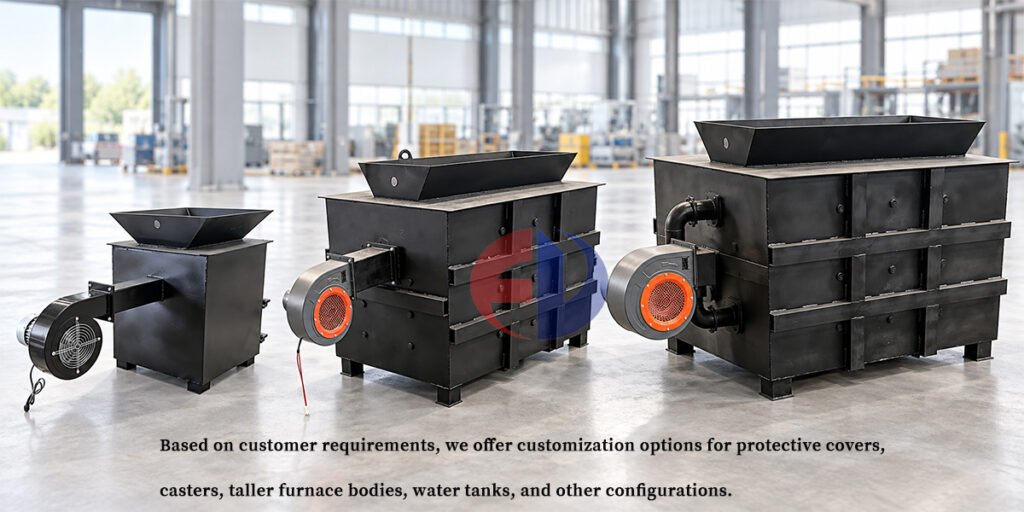
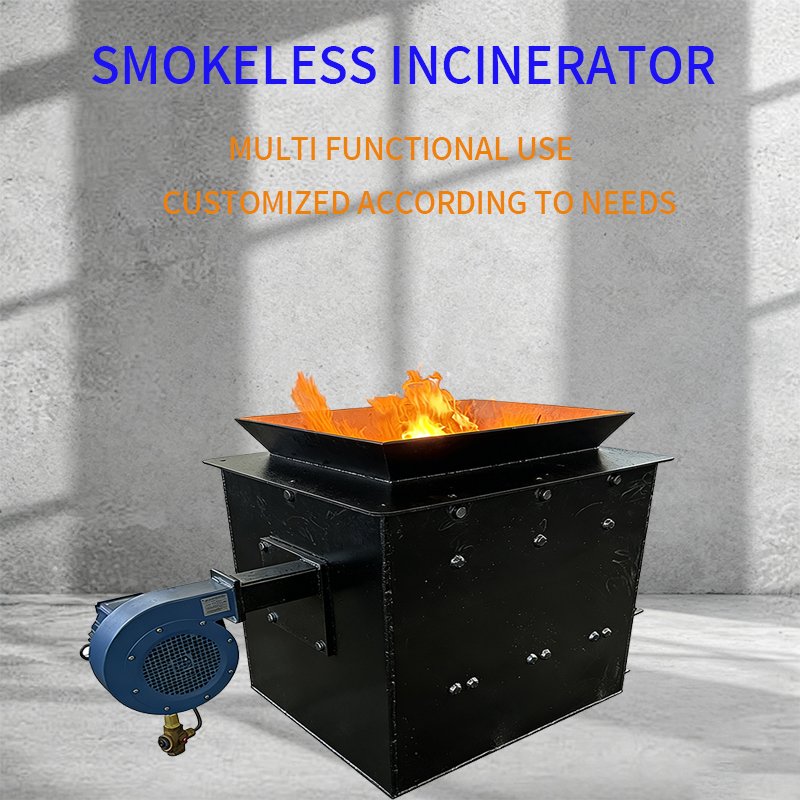
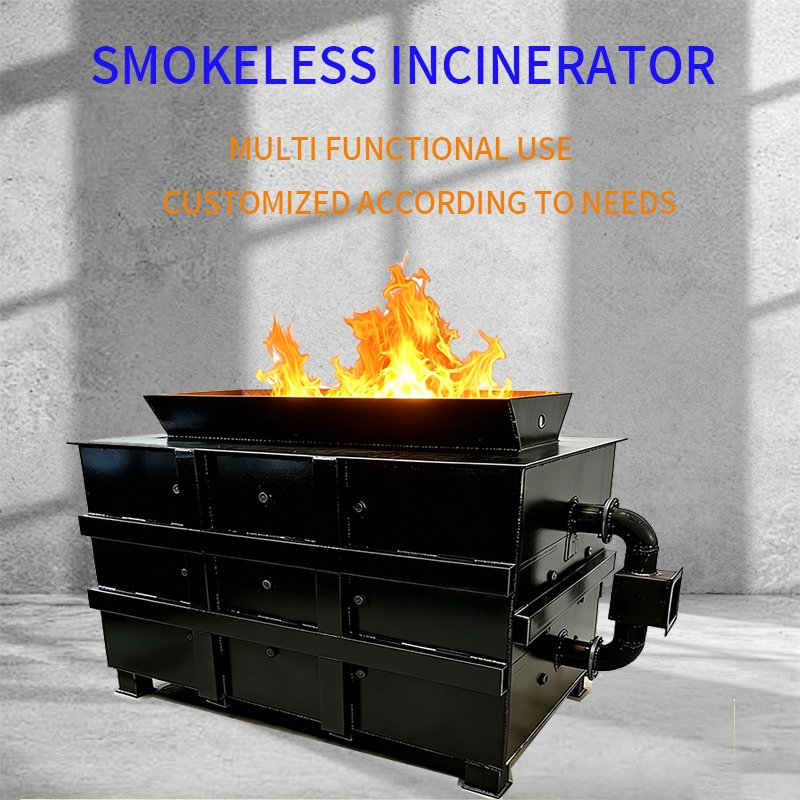
Equipment Model
Output per hour
External Dimensions
Feed Opening Dimensions
Power
FD-001
15-30kg/h
600x550x670mm
450*320mm
250W
FD-002
150-200kg/h
1000*900*1000mm
800*450mm
750W
FD-003
300-400kg/h
2000*1000*1200mm
1280*520mm
1100W
The equipment specifications are for reference only; dimensions can be customized according to customer requirements.
Start by Measuring the Daily Waste Quantity
The first step is to measure how much waste the site actually produces.
Do not rely only on the maximum amount recorded on one unusual day. Collect data over a representative period, such as two to four weeks, and identify:
Average daily quantity
Maximum daily quantity
Seasonal changes
Weekday and weekend differences
Expected future growth
Waste stored from previous days
If a factory generates 600 kg of waste on an average day but reaches 850 kg during peak production, selecting equipment for only 600 kg may create regular waste accumulation.
Whenever possible, weigh the waste. Estimating capacity from the number of bags or containers can be inaccurate because waste density varies greatly.
Identify What Type of Waste Will Be Processed
Two waste streams with the same weight may require very different processing times.
For example:
Dry paper ignites easily but may burn rapidly.
Wet household waste requires more energy for evaporation.
Foam is lightweight but can release heat quickly.
Dense rubber may burn more slowly.
Wood pieces may require size reduction.
Mixed industrial waste may have inconsistent composition.
Food-contaminated waste may contain significant moisture.
Textiles may restrict airflow when tightly packed.
Before choosing capacity, prepare a list of every major waste category and its approximate percentage in the total feed.
Moisture is one of the most important factors affecting actual throughput.
Wet waste absorbs heat because its water must be evaporated before effective combustion can occur. As moisture increases, the incinerator may require:
More auxiliary fuel
More combustion time
Slower feeding
Mixing with dry combustible material
Pre-drying or dewatering
A larger combustion chamber
A machine that processes dry packaging waste efficiently may achieve a much lower throughput when processing wet food-contaminated household waste.
Common high-moisture materials include:
Kitchen waste
Wet household rubbish
Fresh garden waste
Animal bedding
Sewage sludge
Waste stored outdoors
Water-soaked textiles
Food-processing residue
If possible, measure the moisture content of a representative sample instead of describing the material only as “wet” or “dry.”
How Does Calorific Value Affect Capacity?
Calorific value describes how much heat a material can release during combustion.
High-calorific-value waste includes many plastics, rubber products, foam, dry paper, and dry textiles. These materials can release heat rapidly and may need to be fed gradually to avoid excessive furnace temperature.
Low-calorific-value waste includes wet organic material, sludge, soil-contaminated waste, and mixtures containing a large amount of non-combustible matter. These materials may require auxiliary fuel or mixing with suitable dry waste.
The correct incinerator must handle both the required weight and the thermal load. Selecting equipment only by kilograms per hour may be misleading if the waste has an unusually high or low calorific value.
Waste Volume Is Also Important
Capacity is usually expressed by weight, but chamber volume also matters.
Foam packaging, cardboard boxes, loose textiles, branches, and lightweight plastic film may occupy a large space even though they weigh relatively little. Dense rubber, compacted waste, and wet material may have the opposite characteristics.
Buyers should therefore provide:
Daily waste weight
Approximate waste volume
Bulk density, if available
Maximum individual material size
Photographs of the waste
Container or bag dimensions
Bulky waste may need to be cut, shredded, compacted, or loaded more frequently.
Determine the Available Operating Hours
A facility producing one ton of waste per day does not necessarily need an incinerator rated for one ton per hour. The required hourly capacity depends on the number of effective operating hours.
However, eight working hours may not provide eight full hours of waste processing. Time may also be needed for:
Startup and preheating
Loading
Final burnout
Cooling
Ash removal
Routine inspection
Cleaning
Minor maintenance
If only six hours are available for actual waste processing, the same 800 kg would require an average throughput of approximately 133 kg/hour.
This calculation provides a starting point, not a final equipment specification.
Allow a Practical Capacity Reserve
Selecting an incinerator that can process only the exact average daily quantity leaves little room for changes.
A reasonable reserve may be needed for:
Peak production periods
Seasonal waste increases
Future business expansion
Variations in moisture
Variations in waste composition
Equipment cleaning and maintenance
Waste accumulated during shutdown
Unexpected operating delays
For many ordinary projects, buyers may consider a preliminary capacity reserve of approximately 20% to 30%. The appropriate margin depends on the application and should be confirmed with the manufacturer.
A very large reserve is not always beneficial. An oversized furnace operating continuously at a small fraction of its design load may have unstable temperature and inefficient fuel use.
A Simple Capacity-Selection Example
Consider a small industrial facility with the following conditions:
Average waste quantity: 500 kg/day
Maximum waste quantity: 650 kg/day
Planned operating time: 8 hours/day
Effective processing time: 6 hours/day
Waste type: cardboard, textiles and selected packaging
Moisture level: low to moderate
Expected production growth: 20%
Using the maximum current quantity:
650 kg ÷ 6 hours = approximately 108 kg/hour
Adding a 20% reserve:
108 kg/hour × 1.20 = approximately 130 kg/hour
The facility could initially discuss an incinerator with an effective capacity near or above 130 kg/hour under its actual waste conditions.
This is only a preliminary example. A final recommendation requires waste photographs, composition information, material size, moisture data, and local emission requirements.
Small, Medium, or Large Incinerator?
The terms “small,” “medium,” and “large” are relative. They should always be connected to a defined throughput and application.
Equipment range
Typical applications
Main considerations
Small-capacity system
Farms, small hotels, clinics, schools and remote sites
Batch frequency, manual loading and available space
Medium-capacity system
Factories, resorts, communities and industrial sites
Continuous feeding, labor, fuel use and ash handling
Large-capacity system
Centralized treatment facilities and large industrial operations
Automated feeding, gas treatment, monitoring and permits
This table is a general guide. A small volume of hazardous or complex waste may require a more advanced system than a large quantity of simple dry packaging waste.
Why Does the Combustion Process Affect Capacity?
The rated processing capacity can be achieved only when combustion remains stable.
Inside a properly configured smokeless incinerator:
Waste enters the primary chamber.
Moisture evaporates.
Combustible solids undergo drying, pyrolysis and combustion.
Combustible gases move into the secondary combustion area.
Additional air supports more complete gas combustion.
Residue remains for burnout before ash removal.
If waste is fed faster than these stages can occur, furnace temperature and oxygen distribution may become unstable. This can produce visible smoke, incomplete combustion, excessive flames or unburned residue.
Capacity is only one part of the equipment decision. The installation site must also support the complete system.
Important site information includes:
Available floor space
Indoor or outdoor installation
Required foundation
Access for waste delivery
Electricity supply
Fuel availability
Ventilation
Chimney position
Distance from buildings
Ash-storage area
Flue-gas treatment space
Local weather conditions
Local permitting requirements
A larger furnace may require more space for feeding equipment, gas treatment, fans, ducting, ash handling and maintenance access.
What Information Should You Send to the Manufacturer?
For a useful capacity recommendation, provide:
Waste type and source
Average daily quantity
Maximum daily quantity
Operating days per week
Available operating hours per day
Moisture content
Material dimensions
Approximate waste volume
Photographs and videos
Safety Data Sheets for industrial materials
Installation country and city
Local emission requirements
Available electricity and fuel
Expected growth over the next three to five years
The more accurate this information is, the more reliable the proposed equipment configuration will be.
Frequently Asked Questions
How Do I Calculate the Required Incinerator Capacity?
Divide the maximum daily waste quantity by the effective waste-processing hours. Then consider a practical reserve for variations, growth, maintenance and peak production. The calculation must be adjusted for moisture, calorific value and waste type.
Is a Larger Incinerator Always Better?
No. Oversized equipment may cost more and operate inefficiently at low loading levels. The incinerator should match the actual waste stream and planned operating schedule.
Does High-Moisture Waste Need a Larger Incinerator?
It may require more chamber volume, longer processing time, pre-drying or auxiliary fuel. The manufacturer should evaluate moisture together with calorific value and daily quantity.
Can One Incinerator Process Different Types of Waste?
Some systems can process several compatible waste categories, but feeding rates may need to change. Hazardous, medical, chemical and high-halogen waste may require dedicated equipment and additional controls.
Should Capacity Be Based on Average or Maximum Waste Quantity?
Maximum normal operating quantity is usually a safer starting point. Occasional exceptional peaks can be managed through storage or an additional reserve, depending on site conditions.
How Much Extra Capacity Should Be Allowed?
A preliminary reserve of approximately 20% to 30% may be considered for many general applications, but it is not a universal rule. The correct reserve depends on waste variability, future growth and operating time.
Can the Manufacturer Test My Waste?
A representative material test can help evaluate ignition, combustion stability, feeding rate, residue and gas-treatment requirements. Testing is particularly useful for complex industrial waste.
Conclusion
The right smokeless waste incinerator capacity is determined by the complete waste-processing requirement—not by a single number.
Buyers should evaluate daily waste quantity, maximum loading, effective operating hours, moisture content, calorific value, material size, waste volume and future growth. They should also confirm whether the advertised capacity refers to each batch, each hour or each day.
Accurate capacity selection improves combustion stability, reduces waste accumulation and avoids unnecessary investment in oversized equipment.
Fude Machinery provides smokeless waste incinerators for selected household, agricultural, commercial and general industrial waste applications. Visit our smokeless incinerator product page to review available equipment and application information.
For a customized recommendation, please send us:
Waste names and sources
Daily and maximum quantities
Photographs or videos
Estimated moisture content
Maximum material size
Available operating hours
Installation country or region
Local emission requirements
Contact Fude Machinery for waste evaluation, equipment selection, capacity calculation and customized specifications.
Important Notice: Actual incinerator capacity depends on waste characteristics, operating conditions and equipment configuration. Installation, operation, emissions, waste acceptance and ash disposal must comply with applicable local laws and permit requirements.
Look out at any scrap yard, and you will see mountains of potential. Piles of old cars, appliances, and industrial off-cuts. But in that raw form, it is low-value, bulky, and expensive to handle. The tool that unlocks that value is the scrap metal...
The working principle of the metal block press is based on the pressure provided by the hydraulic system to achieve the compression molding of metal materials.
Plastic crusher is a widely used equipment in the field of plastic recycling and reuse, and its working principle and performance characteristics are of great significance to the plastic recycling industry.
Garbage removal services play an essential role in maintaining clean environments, supporting sustainable waste disposal, and helping communities function smoothly. Whether it's residential waste, commercial waste, or industrial disposal, professi...
 Fudemetal Crusher